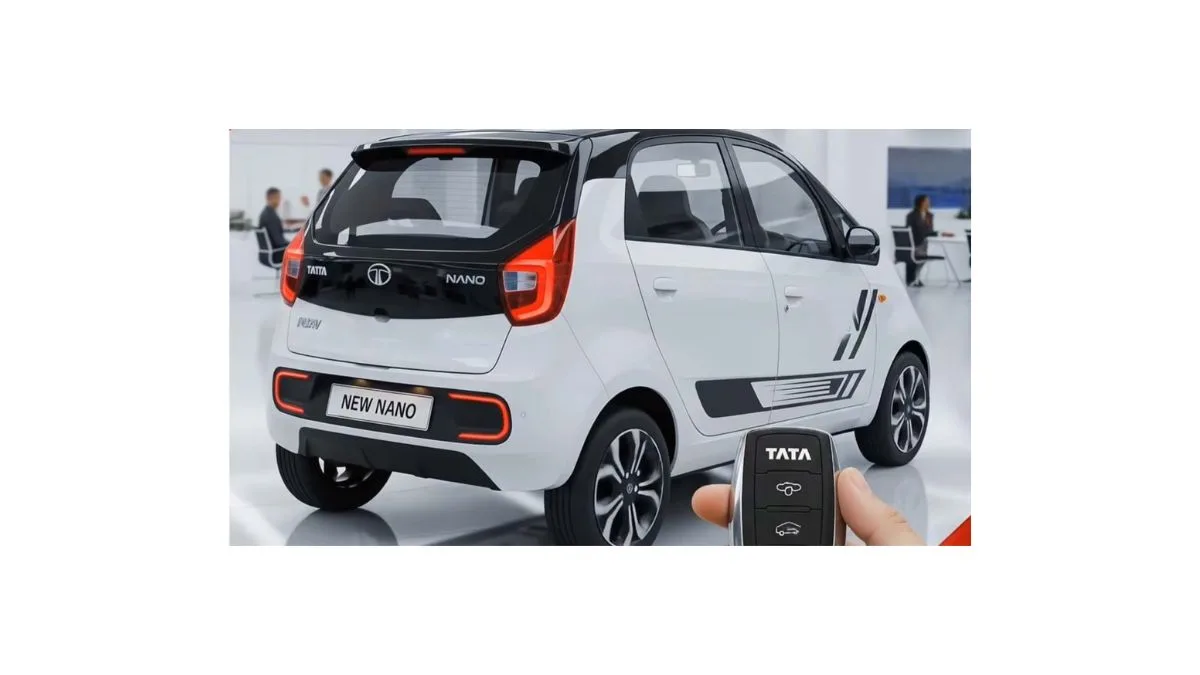
Tata Nano Hybrid 2026 – India’s Most Affordable Hybrid Car with Insane Mileage
The Tata Nano Hybrid is set to redefine affordable urban mobility in India. After once being known as the world’s cheapest car, the Nano is expected to return in a hybrid avatar, combining a petrol engine with electric assistance for unmatched mileage and low emissions. Designed for congested Indian cities, the new Nano Hybrid promises exceptional fuel efficiency, compact dimensions, modern safety upgrades, and ultra-low running costs. Backed by Tata Motors, this reimagined Nano could become the most disruptive budget car launch of the decade, targeting first-time buyers, daily commuters, and cost-conscious families.
What Is the Tata Nano Hybrid?
The Tata Nano Hybrid is an upcoming budget hybrid hatchback expected to revive the iconic Nano brand with a mild-hybrid or strong-hybrid powertrain. Unlike traditional petrol cars, a hybrid system uses electric assistance to reduce fuel consumption, improve torque at low speeds, and cut emissions perfect for stop-and-go city traffic.
The original Tata Nano was discontinued due to safety perception, feature limitations, and changing buyer expectations. The hybrid version aims to fix those gaps while retaining the Nano’s biggest strength: affordability.
Why Tata Nano Hybrid Makes Sense in 2026
India’s automotive market is changing rapidly:
-
Petrol prices remain unpredictable
-
EV charging infrastructure is still limited
-
Hybrid cars offer the best balance between cost and efficiency
The Tata Nano Hybrid sits exactly at this intersection. It is expected to deliver 30–35 km/l real-world mileage, making it ideal for middle-class buyers and urban households.
Expected Engine & Hybrid Technology
The Tata Nano Hybrid is likely to feature:
-
Small-capacity petrol engine (600cc–1000cc)
-
Integrated electric motor for torque assist
-
Regenerative braking system
-
Automatic engine start-stop
-
Compact lithium-ion battery pack
This setup focuses on efficiency over performance, ensuring smooth city driving with reduced fuel consumption.
Expected Mileage & Fuel Efficiency
Mileage is the biggest highlight of the Tata Nano Hybrid.
Expected mileage figures:
-
City driving: 30–35 km/l
-
Highway driving: 28–32 km/l
This would make it one of the most fuel-efficient hybrid cars in India, especially in the sub-₹6 lakh segment.
Expected Price in India
Affordability remains the Nano’s DNA.
Expected price range (ex-showroom):
-
Base variant: ₹2.5 – ₹3.0 lakh
-
Mid variant: ₹3.5 – ₹4.5 lakh
-
Top variant: ₹5.0 – ₹5.8 lakh
If launched at this pricing, the Tata Nano Hybrid could become India’s cheapest hybrid car.
Variants & Trims (Expected)
Tata Motors may offer the Nano Hybrid in multiple trims:
-
XE – Budget-focused city variant
-
XM – Balanced features & mileage
-
XT – Infotainment & comfort focused
-
XZ+ – Safety & tech-loaded version
Safety Features (Major Upgrade Expected)
Safety was the Nano’s weakest point earlier. The hybrid version is expected to improve significantly with:
-
Dual front airbags
-
ABS with EBD
-
Rear parking sensors
-
Speed alert system
-
Seatbelt reminder
-
Stronger body structure
These upgrades align with current Indian safety norms.
Interior & Technology
Despite being a budget hybrid, the Nano Hybrid is expected to offer:
-
Touchscreen infotainment system
-
Bluetooth & smartphone connectivity
-
Digital instrument cluster
-
Power windows (front)
-
USB charging ports
-
Improved seat cushioning
The focus is on essential features with high daily usability.
Exterior Design Changes
The Tata Nano Hybrid is likely to feature:
-
Modern compact hatchback styling
-
LED DRLs (higher trims)
-
Redesigned front grille
-
Sporty wheel covers or alloy wheels
-
Improved ground clearance
The goal is to move away from the “cheap car” image toward a smart city car identity.
Environmental Benefits
Hybrid technology ensures:
-
Lower CO₂ emissions
-
Reduced fuel dependency
-
Better air quality in cities
-
Compliance with future emission norms
This makes the Tata Nano Hybrid an eco-friendly alternative to entry-level petrol cars.
Tata Nano Hybrid vs Petrol Nano (Old)
| Feature | Old Nano | Nano Hybrid |
|---|---|---|
| Mileage | ~23 km/l | Up to 35 km/l |
| Safety | Minimal | Modern safety features |
| Tech | Basic | Touchscreen & digital display |
| Emissions | Higher | Significantly lower |
| Driving | Manual only | Hybrid-assisted smooth drive |
Tata Nano Hybrid vs Small EVs
Many buyers compare hybrids with EVs.
Nano Hybrid advantages:
-
No charging anxiety
-
Lower upfront cost
-
Better resale value
-
Suitable for long drives
This makes it a practical alternative to entry-level EVs.
Target Buyers
The Tata Nano Hybrid is ideal for:
-
First-time car buyers
-
Daily office commuters
-
Small families
-
Students and senior citizens
-
Cost-conscious urban drivers
Expected Launch Timeline
While Tata Motors has not officially confirmed dates, industry expectations suggest:
-
Reveal: Late 2025
-
Launch: Early to mid-2026
Is Tata Nano Hybrid Real or Rumour?
As of now:
-
The Nano Hybrid is not officially launched
-
Multiple industry reports indicate serious evaluation
-
Tata Motors’ focus on hybrids strengthens the possibility
Until an official announcement, specifications remain expected and indicative.
Future Potential of Nano Hybrid
If successful, Tata Motors could expand the lineup with:
-
CNG-Hybrid version
-
Fully electric Nano EV
-
Fleet-focused variants
Final Verdict
The Tata Nano Hybrid could become one of India’s most disruptive car launches if priced aggressively and launched with proper safety standards. With exceptional mileage, low running costs, and hybrid efficiency, it has the potential to redefine entry-level mobility once again.