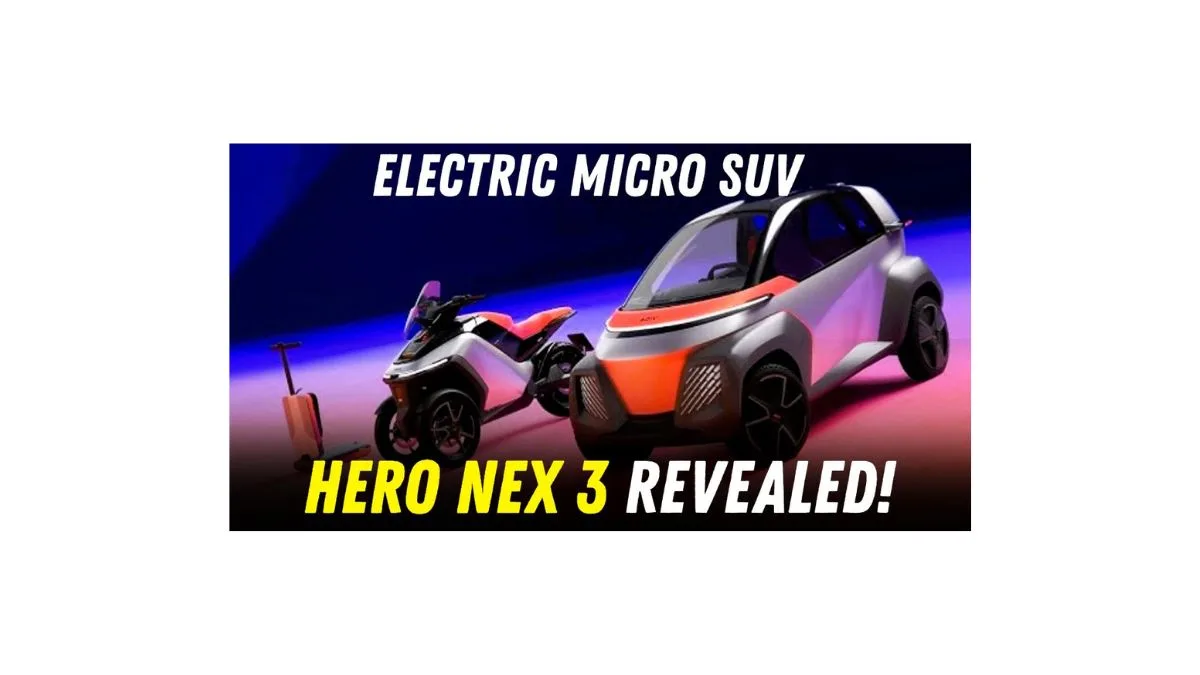
Hero VIDA Novus NEX 3 Explained: India’s Most Futuristic Micro EV Concept So Far
The future of urban mobility in India is rapidly shifting toward compact, electric, and ultra-efficient vehicles and the Hero VIDA Novus NEX 3 fits perfectly into that vision. Unveiled globally as a concept, this micro electric four-wheeler showcases how Indian manufacturers are rethinking personal transportation for congested cities and rising fuel costs. Positioned between a two-wheeler and a conventional car, the NEX 3 promises weather protection, safety, and electric efficiency in a minimal footprint. In this in-depth guide, we explore its design philosophy, expected features, potential India launch, pricing possibilities, rivals, and whether it can realistically succeed in the Indian market.
What Is Hero VIDA Novus NEX 3?
The Hero VIDA Novus NEX 3 is a micro electric four-wheeler concept developed under the VIDA sub-brand of Hero MotoCorp. It was revealed as part of Hero’s Novus vision, which focuses on next-generation, compact, and sustainable mobility solutions.
Unlike regular electric cars, the NEX 3 is designed to:
-
Occupy minimal road space
-
Offer enclosed safety and comfort
-
Deliver zero-emission urban transport
-
Bridge the gap between scooters and small EV cars
Global Reveal & Vision Behind NEX 3
The Novus range, including NEX 1, NEX 2, and NEX 3, was showcased at EICMA, highlighting Hero MotoCorp’s ambition beyond two-wheelers.
Hero’s Vision:
-
Solve urban congestion
-
Reduce carbon footprint
-
Provide affordable electric mobility
-
Create modular future-ready vehicles
The NEX 3 is the most practical and production-ready concept among the Novus lineup.
Design Philosophy: Small Outside, Smart Inside
Exterior Design Highlights
-
Ultra-compact body footprint
-
Fully enclosed cabin
-
Futuristic LED lighting
-
Narrow track width for city manoeuvrability
-
Minimalist, aerodynamic styling
The design prioritises ease of driving in crowded Indian cities rather than aggressive looks.
Seating Layout & Cabin Practicality
One of the most unique aspects of the Hero VIDA Novus NEX 3 is its tandem seating layout:
-
Driver sits in front
-
Passenger sits directly behind
Why This Matters:
-
Keeps the vehicle narrow
-
Easier parking in tight spaces
-
Lower material and battery cost
-
Better energy efficiency
Expected Powertrain & Battery (Speculation)
Since the NEX 3 is still a concept, official specifications are not disclosed. However, based on positioning:
Expected Powertrain
-
Fully electric motor
-
Rear-wheel or front-wheel drive
-
Optimised for city speeds
Expected Battery & Range
| Parameter | Estimated Figure |
|---|---|
| Range | 80–120 km |
| Charging | Home socket + fast charging |
| Usage | Daily urban commute |
Designed for short trips, office runs, and city errands.
Running Cost Advantage for India
Compared to petrol scooters or hatchbacks:
-
Zero fuel cost
-
Very low maintenance
-
Lower servicing frequency
-
EV incentives (if launched)
Ideal for cost-conscious Indian commuters.
Safety Expectations
Even as a micro EV, safety remains important:
Expected Safety Elements
-
Enclosed metal body
-
Seat belts
-
Low centre of gravity
-
Improved crash protection vs scooters
However, it will not replace full-size car safety.
Hero VIDA Novus NEX 3 vs Rivals in India
| Vehicle | Key Difference |
|---|---|
| MG Comet EV | NEX 3 is narrower |
| Tata Nano EV (rumoured) | NEX 3 more futuristic |
| Electric Rickshaws | NEX 3 safer & private |
| Scooters | NEX 3 offers weather protection |
Is NEX 3 Suitable for Indian Roads?
Yes, Because:
-
Congested cities need smaller vehicles
-
Parking space is limited
-
EV adoption is rising
-
Short daily commutes dominate
Challenges:
-
Acceptance of tandem seating
-
Price sensitivity
-
Charging access in apartments
Expected Price in India (If Launched)
| Variant | Expected Price |
|---|---|
| Base | ₹3.5 – ₹4 lakh |
| Top | ₹4.5 – ₹5 lakh |
📌 Pricing will determine success.
India Launch Timeline
-
Concept stage currently
-
Production-ready version may take 2–3 years
-
Possible India debut: 2026–2027
Environmental Impact
-
Zero tailpipe emissions
-
Lower energy consumption
-
Reduced urban pollution
-
Supports India’s EV mission
Who Should Buy the Hero VIDA Novus NEX 3?
-
Urban office commuters
-
Second-vehicle buyers
-
Senior citizens
-
College students
-
Small families for city use
Pros & Cons
Pros
-
Ultra-compact
-
Electric & eco-friendly
-
Lower running cost
-
Innovative design
Cons
-
Limited speed & range
-
Not highway-friendly
-
Concept stage only
Future of Micro EVs in India
Micro EVs like the NEX 3 could:
-
Reduce traffic congestion
-
Lower pollution
-
Replace second petrol vehicles
-
Become popular in Tier-1 cities
Final Verdict
The Hero VIDA Novus NEX 3 represents a bold vision for India’s urban mobility future. While it may not appeal to everyone, it could become a smart, sustainable, and practical solution for daily city travel—if priced right and produced at scale.
1 thought on “Hero VIDA Novus NEX 3 Unveiled 2026 : Revolutionary Micro Electric Car That Could Change Urban India”